









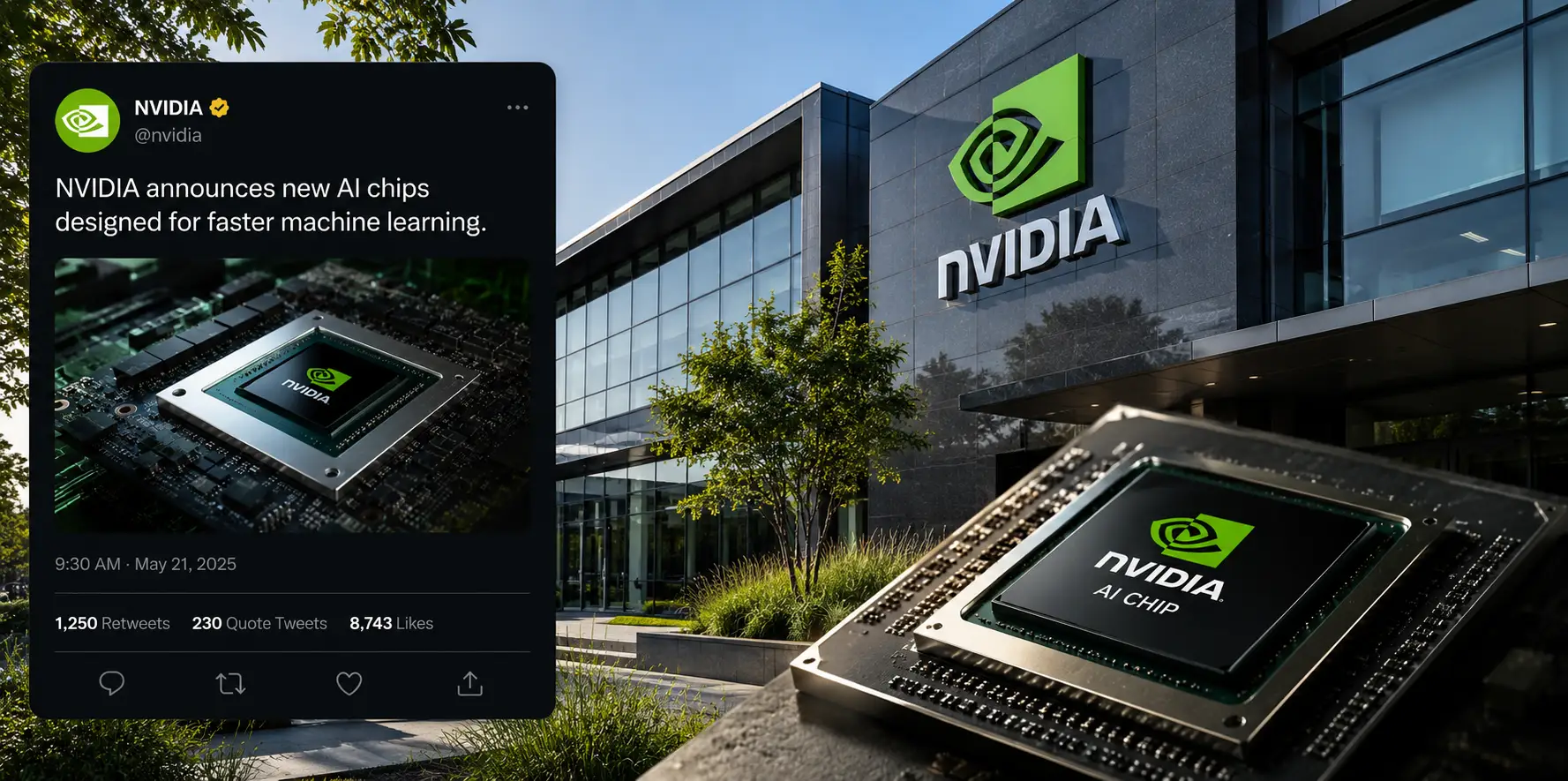
Artificial intelligence (AI) is evolving at an extraordinary pace, and one company continues to sit at the center of that transformation: NVIDIA. From powering advanced chatbots to supporting autonomous vehicles and scientific research, the company’s graphics processors have become the foundation of modern AI computing.
As demand for faster and more efficient machine learning continues to rise, industry experts are closely watching what NVIDIA does next. Although the company regularly introduces new AI hardware, researchers, developers, and enterprise customers are increasingly looking toward the next generation of AI chips that promise even greater performance, improved energy efficiency, and broader support for complex AI workloads.
The growing anticipation highlights a much larger trend within the technology industry. AI is no longer viewed as an experimental technology reserved for research labs. It has become an essential tool for businesses, governments, educational institutions, and creators worldwide.
Why AI Hardware Matters More Than Ever
Training modern AI models requires enormous computing power. Every day, organizations process massive datasets to build applications capable of understanding language, recognizing images, generating videos, and making intelligent predictions.
Traditional processors can handle many computing tasks, but AI workloads require specialized hardware capable of performing trillions of calculations in parallel. This is where NVIDIA has built a strong reputation over the past decade.
Its GPU architecture has become the preferred choice for companies developing large language models, recommendation systems, robotics platforms, healthcare applications, and autonomous technologies.
As AI models become increasingly sophisticated, the need for faster hardware continues to grow. Developers are no longer focused solely on speed. They also need better power efficiency, larger memory capacity, improved scalability, and reduced operating costs.
Machine Learning Is Becoming More Demanding
Only a few years ago, training an advanced AI model required days or weeks. Today, many leading organizations train models containing hundreds of billions of parameters, requiring thousands of GPUs working together simultaneously.
These massive workloads have created unprecedented demand for specialized AI accelerators.
Faster AI chips can significantly reduce training times while enabling developers to experiment with larger models without dramatically increasing operational expenses.
For businesses, this means shorter product development cycles and quicker deployment of AI-powered services.
Healthcare researchers, financial institutions, manufacturers, and scientific laboratories all benefit when AI systems can analyze larger datasets in less time.
Beyond Speed: Efficiency Is the New Priority
Performance alone is no longer enough.
Modern data centers consume enormous amounts of electricity, making energy efficiency a major concern for cloud providers and enterprise customers.
The next wave of AI processors is expected to focus not only on raw computing power but also on reducing energy consumption per AI task.
Improved efficiency allows companies to lower operating costs while supporting increasingly demanding workloads.
For organizations investing millions of dollars in AI infrastructure, even modest improvements in efficiency can translate into substantial long-term savings.
Growing Competition Is Accelerating Innovation
NVIDIA remains one of the most influential players in AI hardware, but competition is intensifying.
Major technology companies are investing heavily in custom AI chips designed specifically for cloud computing and machine learning applications. This competitive environment is encouraging faster innovation across the semiconductor industry.
Instead of competing only on processing speed, chip manufacturers are now focusing on software ecosystems, developer tools, networking technologies, and integrated AI platforms.
This broader approach helps organizations deploy AI solutions more efficiently while simplifying large-scale infrastructure management.
AI Adoption Continues Across Every Industry
One of the biggest reasons demand for AI chips continues to increase is the rapid expansion of artificial intelligence across multiple industries.
Hospitals are using AI to assist with medical imaging and disease detection.
Manufacturers rely on machine learning to improve quality control and predictive maintenance.
Financial institutions analyze transactions in real time to identify fraud and assess risk.
Retail companies personalize customer experiences using recommendation engines powered by AI.
Even small businesses are beginning to integrate generative AI into customer service, marketing, and workflow automation.
As adoption grows, demand for high-performance AI hardware is expected to remain strong.
Developers Want More Than Powerful Hardware
Today’s AI developers expect complete ecosystems rather than standalone processors.
Software compatibility, optimized libraries, developer frameworks, and cloud integration play a major role in determining which hardware organizations choose.
NVIDIA has invested heavily in creating a comprehensive AI software ecosystem that simplifies development for researchers and enterprises alike.
This combination of hardware and software has helped the company maintain a significant position within the AI industry.
Future AI platforms are expected to build on this approach by offering even better support for model optimization, distributed computing, and advanced AI applications.
What Businesses Should Watch
Organizations planning future AI investments should pay attention to several important trends.
First, AI infrastructure is becoming increasingly specialized, with processors designed for specific workloads such as training, inference, and edge computing.
Second, energy efficiency is emerging as a critical purchasing factor alongside raw performance.
Third, software support and long-term compatibility are becoming just as valuable as hardware specifications.
Businesses that evaluate these factors carefully are more likely to maximize the return on their AI investments.
The Future of AI Computing
Artificial intelligence continues to reshape how businesses operate, how researchers solve complex problems, and how consumers interact with technology every day.
As AI models become larger and more capable, the hardware powering them must evolve as well.
The next generation of AI processors is expected to deliver faster performance, improved efficiency, and better scalability for organizations building tomorrow’s intelligent applications.
Whether supporting scientific breakthroughs, accelerating enterprise automation, or enabling more advanced generative AI tools, innovations in AI hardware will play a central role in the industry’s future.
For developers, businesses, and technology enthusiasts alike, the coming years promise exciting advances in machine learning infrastructure. While competition across the semiconductor industry continues to intensify, one thing remains clear: demand for powerful AI computing is showing no signs of slowing down, and the companies driving hardware innovation will continue to shape the future of artificial intelligence.