









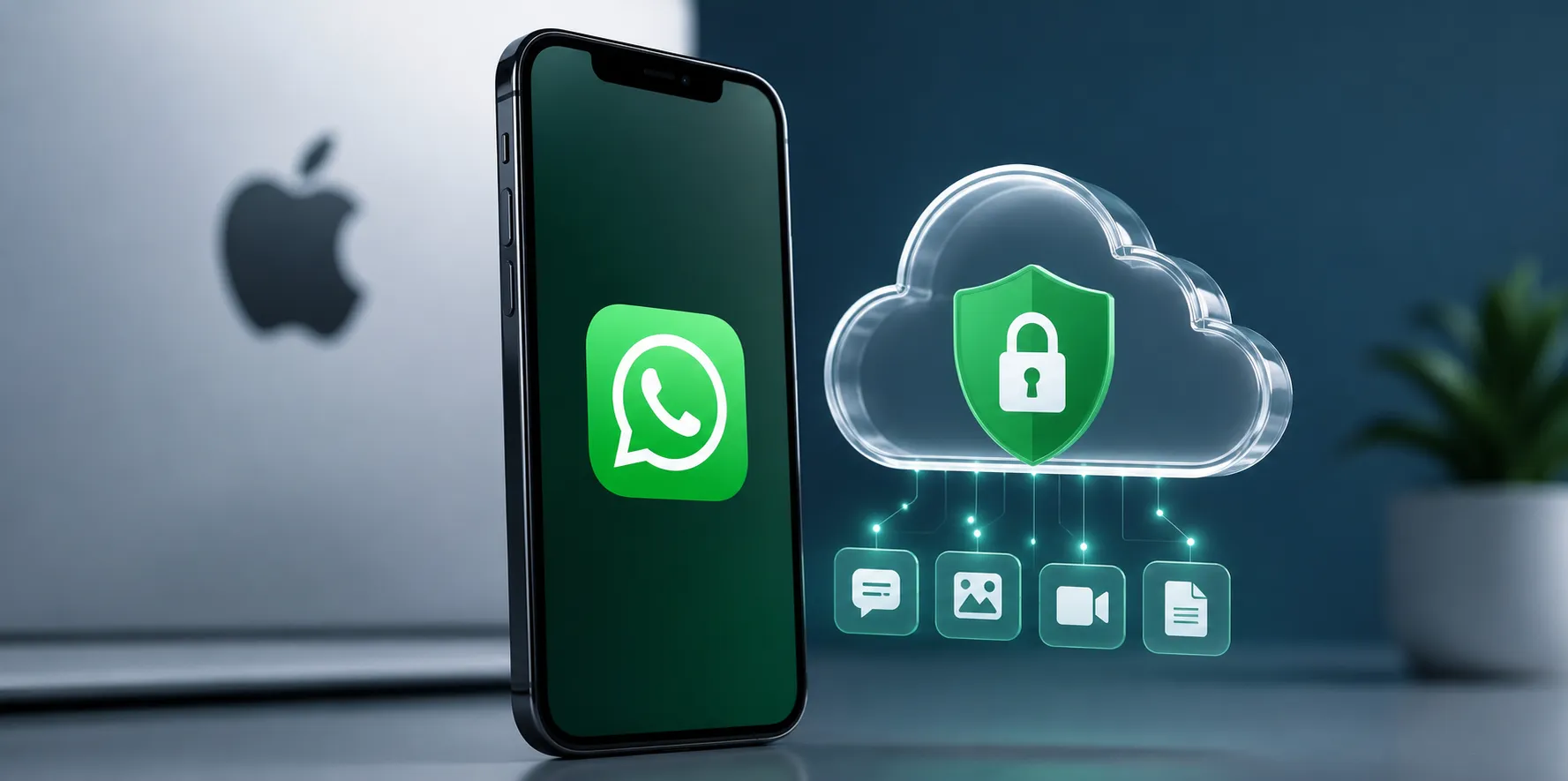
WhatsApp may be preparing one of its biggest privacy upgrades in years, as new reports suggest the messaging giant is testing a dedicated cloud backup service that could reduce its dependence on Apple’s iCloud infrastructure for storing chat histories.
The feature, currently spotted in beta versions of the app, appears to focus on giving users more control over how their messages, photos, and videos are backed up while maintaining strong end-to-end encryption standards. If released globally, the update could change the way millions of iPhone users protect their conversations and restore data when switching devices.
A New Direction for Chat Backups
For years, WhatsApp users on iPhones have relied on iCloud to save chat histories. Although WhatsApp introduced end-to-end encrypted backups in recent years, users still had to depend on Apple’s cloud storage system and its available storage space.
The new system being tested reportedly introduces an alternative approach. Instead of requiring users to store their chat archives entirely within iCloud, WhatsApp appears to be developing its own encrypted backup provider.
This would give users another option for storing their conversations while keeping security protections intact.
Industry observers believe the move could help solve several long-standing frustrations among users, particularly those who frequently run out of iCloud storage because of photos, videos, and device backups.
Why This Matters for Privacy
Messaging apps have increasingly become digital vaults containing years of personal conversations, business discussions, family photographs, and sensitive documents.
While WhatsApp’s messages are already protected by end-to-end encryption, backups have historically been a weak spot in many communication platforms. Security experts have repeatedly warned that cloud backups can become attractive targets for cybercriminals if they are not adequately protected.
By creating its own encrypted cloud backup solution, WhatsApp could potentially provide another layer of control over how user data is stored and restored.
Cybersecurity researchers often point out that encryption is most effective when companies minimize the number of third parties involved in handling user data. A dedicated backup platform may help simplify security management while giving WhatsApp greater flexibility in implementing new privacy tools.
Reducing Dependence on Third-Party Cloud Providers
Technology companies are increasingly trying to reduce reliance on external infrastructure providers.
Over the past few years, several major firms have invested heavily in building their own data centers, cloud services, and AI systems. Meta, WhatsApp’s parent company, has also been expanding its infrastructure capabilities around the world.
Developing an independent backup service fits within that broader strategy.
For users, the biggest benefit could be convenience. A dedicated WhatsApp cloud backup system may allow people to restore chats more quickly, transfer conversations between devices with fewer complications, and avoid purchasing additional cloud storage subscriptions simply to preserve message histories.
iPhone Users Have Been Asking for More Flexibility
Many iPhone owners use the free 5GB iCloud plan provided by Apple. That storage fills up quickly once photos, videos, app data, and device backups begin accumulating.
As a result, some WhatsApp users disable chat backups entirely because they do not have enough available space.
This creates a major problem when a phone is lost, damaged, or upgraded. Without backups, years of messages and media can disappear permanently.
A separate encrypted backup option could give users greater flexibility and potentially encourage more people to keep their conversations safely stored.
The feature may also appeal to users who prefer keeping their messaging data separate from other cloud services.
Security Will Remain a Major Focus
WhatsApp has spent years promoting its privacy credentials. The platform uses the Signal encryption protocol and frequently introduces new security tools, including disappearing messages, chat locks, passkeys, and device verification systems.
Any new cloud backup service would likely be designed around the same philosophy.
Security specialists say users increasingly expect privacy protections to extend beyond messages themselves and include the entire lifecycle of their data, including backups, transfers, and account recovery.
If WhatsApp launches its own encrypted storage system, it will likely need to demonstrate that the company cannot access users’ backup contents and that encryption keys remain under user control.
Maintaining trust will be critical, especially at a time when consumers are becoming more aware of digital privacy risks.
Could the Feature Expand Beyond iPhones?
Reports indicate that WhatsApp has also been exploring similar backup alternatives for Android devices.
That suggests the company may eventually create a unified backup platform that works across both major mobile operating systems.
Such an approach could simplify device switching and make it easier for users to move between Android and iPhone without worrying about losing years of conversations.
Cross-platform compatibility has become increasingly important as people frequently upgrade phones and use multiple devices throughout the day.
What Happens Next?
The feature is still being tested and has not been officially announced for public release. As with many beta features, there is no guarantee that it will immediately reach all users.
However, the appearance of the option inside test versions of WhatsApp suggests that development is actively progressing.
If the company proceeds with a full rollout, the update could become one of WhatsApp’s most significant privacy enhancements of 2026.
For billions of people who depend on the app every day, chat histories represent more than simple text messages—they contain memories, important records, and personal moments. Giving users more secure and flexible ways to protect those conversations could become a major selling point in an increasingly privacy-focused digital world.