








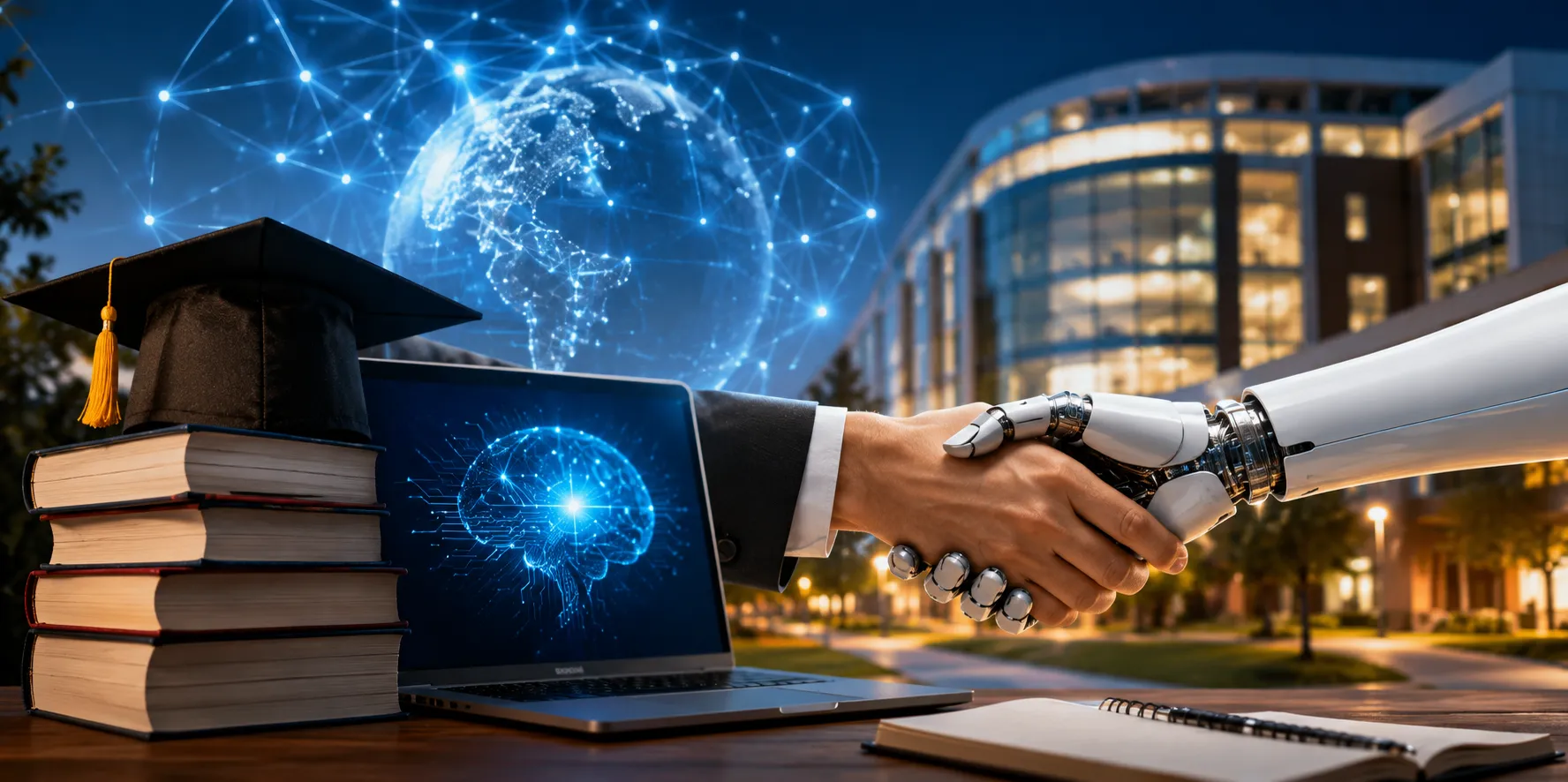
Artificial intelligence is no longer a technology being discussed only in research labs or Silicon Valley boardrooms. It is quickly becoming a part of everyday work, changing how businesses operate and the skills employers expect from their workforce. Recognizing this shift, the University of Phoenix has announced a new collaboration with OpenAI aimed at expanding AI-powered learning, workforce development, and educational research.
The partnership reflects a growing belief across higher education that students need more than traditional degrees to succeed in the modern economy. They also need practical knowledge of emerging technologies that are transforming industries around the world.
A Shift From AI Concerns to AI Opportunities
Just a few years ago, universities were debating whether artificial intelligence would create more problems than solutions in education. Educators worried that students might use AI tools to complete assignments without fully understanding the material. Questions about academic integrity and the role of technology in the classroom dominated discussions.
Today, the conversation looks very different.
Many institutions now see AI as an opportunity rather than a threat. Instead of asking whether students should use artificial intelligence, universities are increasingly focusing on how to teach them to use it responsibly and effectively.
The University of Phoenix’s latest move is part of this broader transformation. The institution wants to make AI literacy an important part of the learning experience, helping students understand how intelligent technologies can support research, improve productivity, and solve real-world problems.
Preparing Students for an AI-Powered Workforce
Businesses in nearly every sector are investing heavily in artificial intelligence.
From healthcare and finance to customer service and marketing, companies are adopting AI tools to streamline operations and improve efficiency. As a result, employers are placing greater value on workers who understand how to collaborate with intelligent systems.
The University of Phoenix believes that preparing students for these changes requires more than teaching technical concepts. The goal is to develop practical skills that can be applied immediately in the workplace.
Students will be encouraged to learn how AI can assist with communication, decision-making, information analysis, and problem-solving. These abilities are becoming increasingly valuable as organizations seek employees who can combine human judgment with technological capabilities.
For adult learners and working professionals, gaining these skills could provide new opportunities for career advancement in an increasingly competitive job market.
Researching the Future of Learning
Another major component of the collaboration focuses on research.
Artificial intelligence is evolving rapidly, and educators are still trying to understand its long-term effects on learning and professional development. Universities are asking important questions about how AI changes the educational experience and whether it can improve student outcomes.
Can personalized AI tools help learners understand difficult subjects more effectively? Can intelligent systems increase engagement and improve knowledge retention? How should educational institutions adapt as AI becomes more deeply integrated into society?
The University of Phoenix plans to explore these questions through research initiatives that examine how people interact with AI technologies and how those tools can be used to support education and workforce training.
The findings could contribute to broader discussions about the future of higher education and provide valuable insights into how institutions can responsibly adopt emerging technologies.
A Growing Trend Across Higher Education
The collaboration also highlights a larger trend taking shape around the world.
Universities are increasingly recognizing that artificial intelligence is becoming a foundational skill, much like computer literacy and internet proficiency became essential in earlier generations.
Educational institutions are introducing AI courses, creating technology-focused training programs, and exploring new ways to integrate intelligent systems into teaching and administration.
The University of Phoenix’s partnership with OpenAI demonstrates how seriously higher education is taking this transition. Institutions no longer want students to simply understand what AI is. They want graduates to know how to use it, evaluate it, and adapt alongside it.
Balancing Innovation With Responsibility
While excitement around artificial intelligence continues to grow, educators also acknowledge the challenges that come with the technology.
AI systems can generate inaccurate information, reflect hidden biases, and raise concerns about privacy and ethics. Because of these risks, experts argue that responsible use must be a central part of any AI education initiative.
Teaching students to think critically about AI-generated content may become just as important as teaching them how to use the technology itself.
The University of Phoenix has indicated that responsible adoption and thoughtful implementation will play an important role in the collaboration. The institution aims to help learners understand both the opportunities and limitations of artificial intelligence as it becomes more deeply integrated into everyday life.
The Next Evolution of Digital Education
Higher education has undergone several major technological shifts over the past few decades, from the rise of online classes to the expansion of digital learning platforms. Artificial intelligence could become the next transformative chapter.
The collaboration between the University of Phoenix and OpenAI suggests that universities are preparing for a future in which AI is embedded throughout education and professional development.
As industries continue to evolve and demand new skills, institutions that embrace innovation while maintaining a focus on responsible learning may play a crucial role in preparing students for the changing world of work.
For many educators, the message is becoming increasingly clear: understanding artificial intelligence may soon be as essential as understanding the internet itself, and universities are moving quickly to ensure that students are ready for that future.