









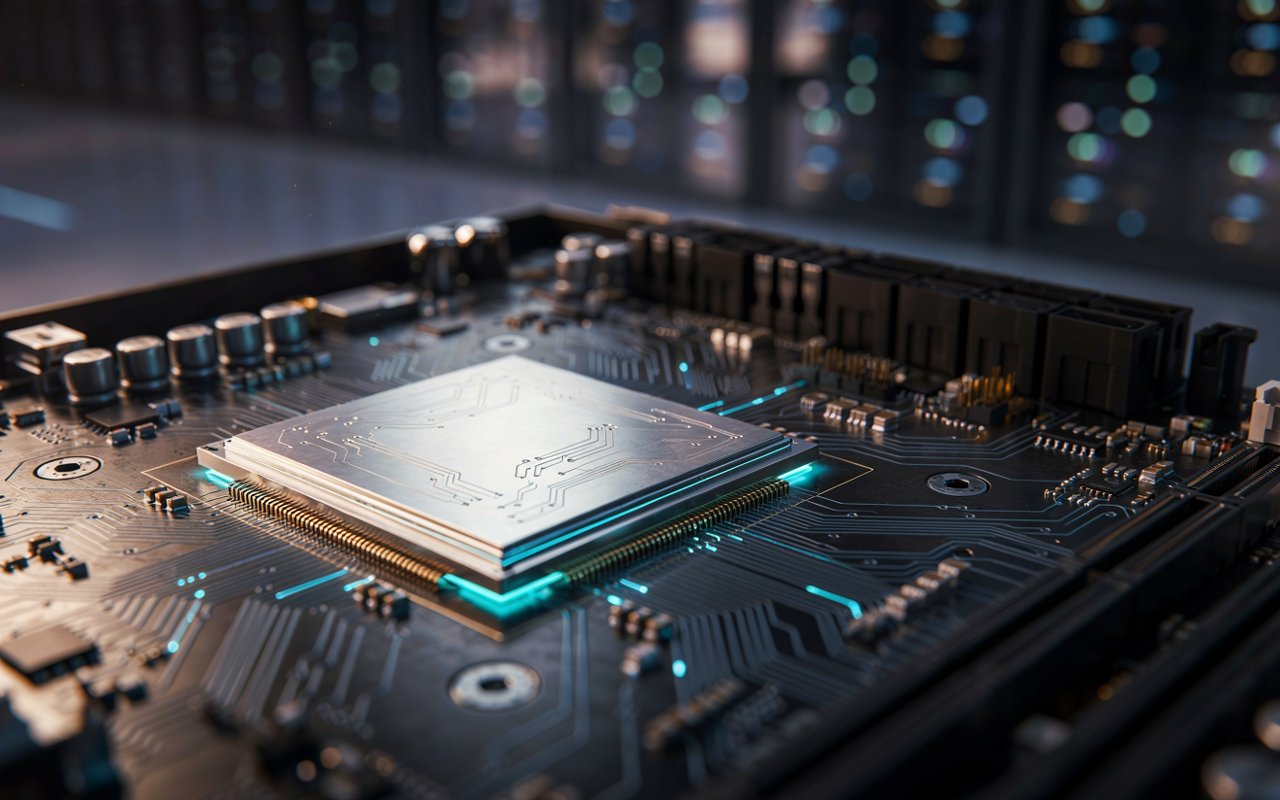
Meta is reportedly preparing to begin production of a new internally developed artificial intelligence processor later this year, marking another major step in the company’s effort to reduce its dependence on third-party chip suppliers and strengthen its AI infrastructure.
According to details cited from an internal company memo, the new processor—internally known as “Iris”—is expected to enter production in September. The chip is part of Meta’s broader Meta Training and Inference Accelerator (MTIA) program, an initiative designed to create custom processors tailored specifically for the company’s AI workloads.
The project reflects Meta’s growing determination to control more of its own hardware stack as the competition for AI computing resources intensifies across the technology industry.
A Bigger Bet on Custom Silicon
For years, major technology firms have relied heavily on processors from companies such as Nvidia and AMD to train and run advanced AI models. However, the explosive demand for AI computing has made these chips increasingly expensive and, at times, difficult to secure in large quantities.
By developing its own processors, Meta hopes to improve efficiency, lower long-term costs, and ensure a more stable supply of computing power for products and services across Facebook, Instagram, and its expanding AI ecosystem.
The company is also aiming to dramatically increase its computing capacity, with reports indicating that Meta wants to reach approximately 14 gigawatts of total compute infrastructure by next year, a massive scale-up that underscores the company’s long-term AI ambitions.
Broadcom and TSMC Play Key Roles
Although Meta is leading the initiative, it is not building the chips entirely on its own.
The company has reportedly partnered with Broadcom on chip design and is relying on Taiwan Semiconductor Manufacturing Company (TSMC) to manufacture the processors.
TSMC remains the world’s leading contract chipmaker and is responsible for producing some of the most advanced semiconductors used throughout the technology industry.
According to the internal memo, early testing of the Iris processor was completed in around six weeks and reportedly revealed no significant issues, a promising sign for a project that has faced challenges in previous years.
A New Release Schedule
Meta first introduced the latest generation of its MTIA processors earlier this year and is reportedly targeting an aggressive roadmap that would see new chips released approximately every six months through 2027.
Such a rapid release cycle would be notable in the semiconductor industry, where major chip updates often occur on annual timelines.
The accelerated schedule suggests Meta is determined to catch up with rivals that already have mature in-house AI hardware programs.
Massive Spending on AI Infrastructure
The chip project is only one piece of Meta’s enormous AI investment strategy.
Industry estimates suggest the company could spend up to $145 billion on AI infrastructure during 2026, including data centers, servers, networking equipment, and semiconductor technologies.
Across the broader technology industry, spending on AI infrastructure is projected to exceed $700 billion this year, highlighting the extraordinary scale of the current AI race.
Growing demand for processors and memory components has also pushed prices higher, leading some analysts to describe the trend as “chipflation”, as companies compete for limited supplies of advanced hardware.
Securing the Supply Chain
Meta has also been taking steps to lock in long-term supply agreements beyond processors.
Reports indicate that the company has reached deals with several suppliers, including:
- Samsung Electronics for memory chips.
- Sandisk for storage technologies.
- Sumitomo Electric for fiber-optic infrastructure used in large-scale data centers.
These agreements are intended to ensure that Meta’s ambitious expansion plans are not slowed by shortages in critical components.
Joining a Growing Industry Trend
Meta is not alone in pursuing custom AI hardware.
Other technology giants, including Google, Amazon, and Microsoft, have spent years building their own AI accelerators to reduce dependence on outside suppliers and optimize performance for specific workloads.
Google’s Tensor Processing Units (TPUs), for example, have become a key part of the company’s AI operations.
Meta’s approach appears to fall somewhere in the middle. Rather than building its own semiconductor manufacturing facilities, the company is developing its chip designs internally while relying on established partners to fabricate the hardware.
Challenges Still Remain
Despite the optimism surrounding Iris, custom silicon projects are notoriously difficult to execute.
Many companies have discovered that processors that perform well in testing environments can face significant challenges when deployed across thousands of servers in real-world conditions.
Meta’s earlier MTIA efforts reportedly encountered performance issues and struggled to meet some internal expectations, making the success of Iris particularly important for the company’s future AI strategy.
The reported early testing results may be encouraging, but the true test will come when the chips are deployed at scale.
Looking Ahead
If production begins as expected in September, the coming months could represent a turning point for Meta’s hardware ambitions.
A successful launch would not only strengthen the company’s AI capabilities but could also reduce costs and provide greater control over the infrastructure powering its next generation of AI products.
As the global race for AI dominance accelerates, Meta’s investment in custom silicon signals that the battle is no longer just about building smarter models—it’s also about owning the hardware that makes those models possible.