









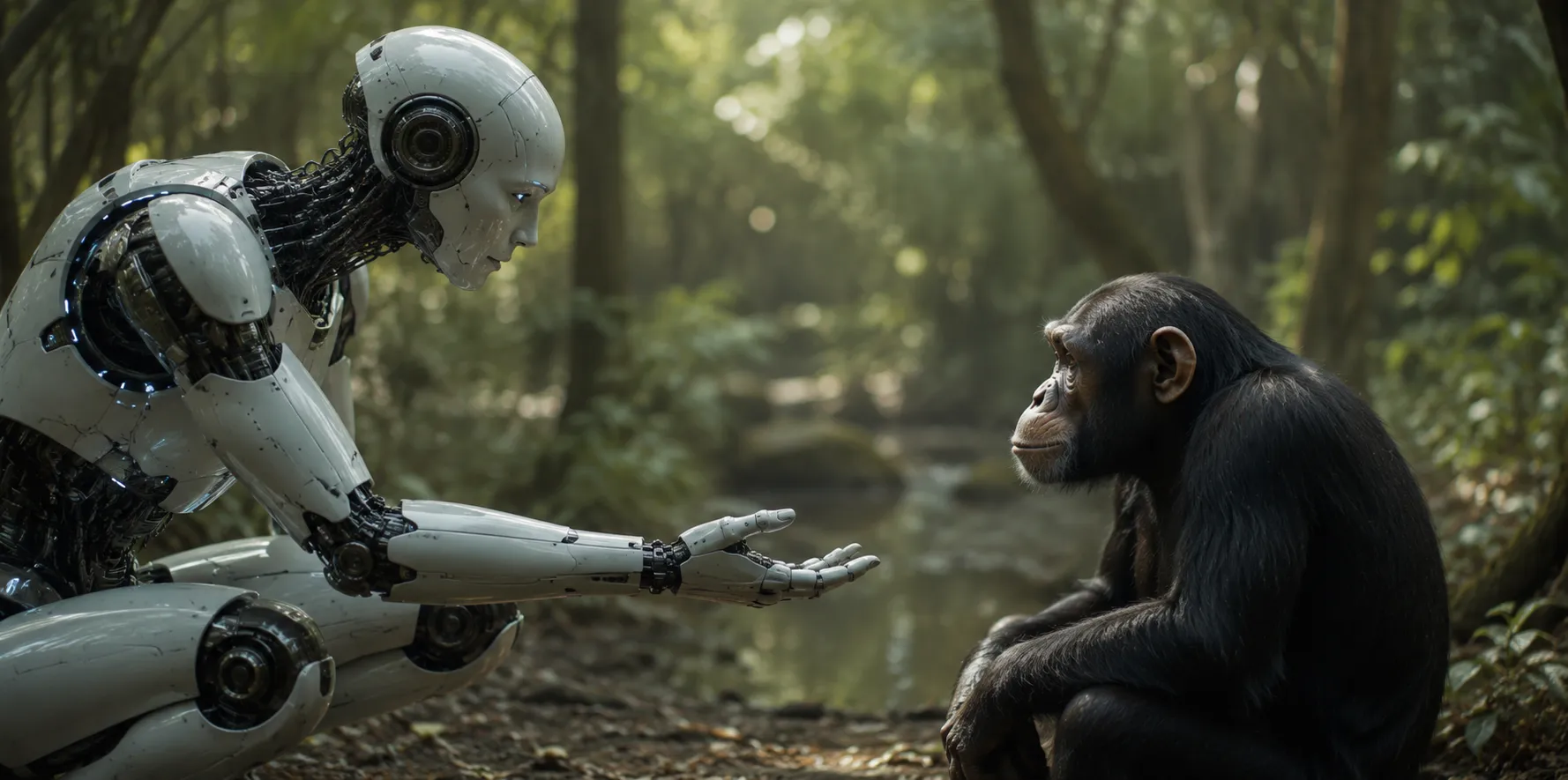
For centuries, humans have dreamed of understanding what animals are trying to say. From dolphins clicking beneath the ocean to dogs barking at their owners and birds singing in the morning, animal communication has always fascinated scientists and pet lovers alike. Now, advances in artificial intelligence are bringing that dream a little closer to reality.
Researchers around the world are increasingly using AI tools to study animal sounds, movements, and behaviors in ways that were impossible just a few years ago. While experts say we are still far from having a real-life “animal translator,” new technology is helping scientists uncover patterns in animal communication that may eventually allow humans to better understand other species.
AI Is Listening to the Animal Kingdom
Artificial intelligence has become extremely good at analyzing large amounts of data. This ability is now being used to process millions of recordings from animals, including whales, dolphins, elephants, birds, and even household pets.
Scientists use machine learning models to identify recurring patterns in sounds and determine whether specific calls are linked to particular behaviors or emotions. Some researchers believe these patterns could eventually lead to systems that can interpret certain animal messages.
For example, researchers studying sperm whales have collected thousands of clicking sounds and are using AI to identify whether specific sequences carry particular meanings. Similar projects are also examining the communication methods of crows, bats, and dolphins.
The idea is simple: if AI can understand human languages by finding patterns in words and sentences, perhaps it can do something similar with animal communication.
Understanding Emotions in Pets
One of the most promising areas of research involves pets, especially dogs and cats.
Several technology companies are developing AI-powered applications that analyze a dog’s bark or facial expressions to determine whether the animal is excited, anxious, hungry, or stressed. Some smart collars and pet-monitoring devices already provide owners with information about their pet’s mood and activity levels.
Veterinarians say these technologies could become valuable tools, particularly for owners who struggle to understand subtle signs of illness or discomfort in their pets.
However, experts warn that current systems should not be treated as perfect translators. A dog’s bark can mean different things depending on the situation, environment, and the individual animal’s personality.
The Search for Animal Languages
Some researchers believe that certain species may have communication systems that are much more complex than previously thought.
Whales, for example, produce long and structured sequences of sounds that some scientists compare to the building blocks of language. Dolphins also communicate using whistles and clicks that appear to carry information about identity and social relationships.
Artificial intelligence can process these massive datasets far faster than humans can. By detecting hidden patterns, AI may help scientists discover whether animals use rules that resemble grammar or syntax.
If such patterns exist, researchers could eventually create systems that predict the likely meaning behind specific sounds or behaviors.
Big Challenges Still Remain
Despite the excitement surrounding AI and animal communication, scientists caution that major obstacles remain.
Unlike human languages, animals cannot directly tell researchers whether a translation is correct. This makes it difficult to verify AI-generated interpretations.
Another challenge is context. A sound made by an elephant during play may have a completely different meaning when used in a dangerous situation. Understanding these nuances requires years of observation and enormous amounts of data.
Experts also say there is a risk of humans projecting their own emotions and ideas onto animals. AI can identify patterns, but determining actual meaning remains a much more difficult task.
Ethical Questions Are Emerging
The possibility of understanding animal communication also raises important ethical questions.
If researchers eventually discover that certain animals express complex emotions or sophisticated thoughts, society may need to rethink how some species are treated in captivity, entertainment, or commercial industries.
Conservation groups believe AI could also become an important tool for protecting endangered species. By monitoring animal sounds in forests and oceans, scientists can track populations, detect threats, and better understand animal behavior without disturbing natural habitats.
A Future Where Humans and Animals Understand Each Other?
For now, experts say the idea of having a conversation with a pet dog or asking dolphins questions remains firmly in the realm of science fiction.
However, artificial intelligence is already helping researchers learn more about the hidden communication systems of the animal world. Every new discovery brings scientists one step closer to understanding how animals share information, express emotions, and interact with one another.
The technology may never create a perfect translator that converts barks, chirps, or whale songs directly into human language. But it is opening a new window into a world that has remained largely mysterious for thousands of years.
As AI continues to evolve, one question remains more intriguing than ever: if humans finally learn what animals are trying to say, are we truly ready to listen?