









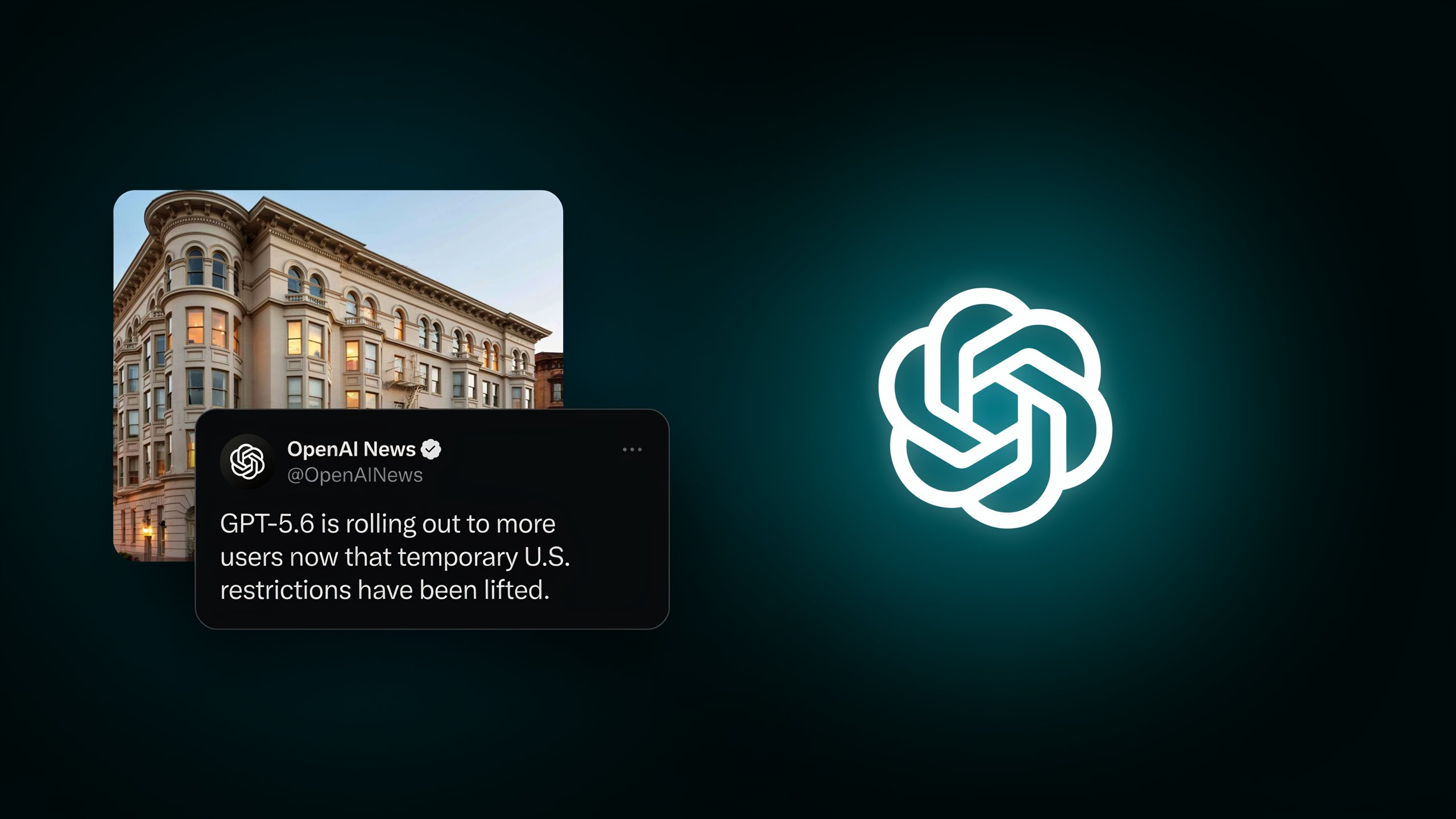
OpenAI Expands GPT-5.6 Release After U.S. Government Lifts Restrictions
The artificial intelligence industry rarely slows down, but over the past few weeks even one of its biggest players found itself waiting.
OpenAI is now preparing to make its latest AI model family, GPT-5.6, available to a much larger audience after a period of limited access tied to government review and security concerns. The development has attracted attention far beyond Silicon Valley because it highlights a new reality: advanced AI is no longer just a technology story—it has become a policy and national competitiveness issue.
For OpenAI, the wider launch of GPT-5.6 represents more than another product update. It is a chance to push its newest technology into the hands of businesses, developers, and everyday users at a time when competition in the AI industry is becoming fiercer by the month.
A Rare Pause in AI’s Fast Lane
Technology companies usually announce new products and release them almost immediately. In the world of artificial intelligence, the pace is even faster. Companies race to unveil models with better reasoning, faster responses, and stronger coding abilities.
That is why the temporary limits surrounding GPT-5.6 stood out.
The model had reportedly been expected to reach a broader audience sooner, but concerns surrounding the power and possible applications of advanced AI systems led to a more cautious rollout. During this period, only a small group of organizations and trusted partners had access to the technology.
The delay sparked conversations across the industry. Some saw it as a responsible step, arguing that increasingly capable AI systems deserve additional scrutiny before becoming widely available. Others worried that slowing innovation could leave American companies at a disadvantage in the global AI race.
Now, with those restrictions lifted, OpenAI appears ready to move forward.
Why GPT-5.6 Matters
Every new AI release promises improvements, but industry watchers believe GPT-5.6 could be one of OpenAI’s most significant upgrades yet.
People familiar with early testing have described the model as more reliable, better at understanding complex instructions, and noticeably stronger at reasoning tasks. It is also expected to perform better in areas such as software development, advanced research, and long-form content generation.
For businesses, those improvements could translate into practical benefits.
A customer support system powered by more capable AI could answer questions more accurately. Software developers may use the model to speed up coding tasks. Research teams could analyze information faster and generate ideas with greater efficiency.
In other words, GPT-5.6 is not simply about producing smarter chatbots. It is part of a broader shift toward AI systems that can handle increasingly sophisticated work.
The Government’s Growing Role in AI
The story surrounding GPT-5.6 also reflects a much bigger trend.
Governments around the world are paying closer attention to artificial intelligence than ever before. A few years ago, AI regulation was largely an academic discussion. Today, it has become a strategic issue involving national security, economic growth, and technological leadership.
Officials have raised questions about how powerful AI systems might be used, whether in cybersecurity, scientific research, or other sensitive fields. As these models become more capable, governments are finding it harder to ignore their potential impact.
The temporary limitations placed on GPT-5.6 suggest that policymakers are increasingly willing to step in when they believe additional oversight is necessary.
For technology companies, this creates a new challenge. Innovation still matters, but navigating regulations and government expectations may become just as important.
The AI Competition Is Getting More Intense
OpenAI’s latest move comes during one of the most competitive periods the AI industry has ever seen.
Major technology companies are releasing new models at an astonishing pace. Startups are entering the market with ambitious ideas, while international competitors are rapidly improving their own systems.
In particular, Chinese AI firms have gained significant attention by introducing increasingly capable models at lower costs. Their rapid progress has intensified pressure on American companies to keep innovating.
This growing competition means that every major AI launch now carries larger implications.
When a company releases a new model, it is not just competing for users—it is competing for talent, investment, business partnerships, and long-term leadership in one of the world’s most important technologies.
Businesses Are Watching Closely
The wider availability of GPT-5.6 is likely to be welcomed by companies that have been waiting to experiment with the new technology.
Businesses are already using artificial intelligence to write code, summarize documents, automate customer support, and improve productivity. More advanced AI systems could expand those capabilities even further.
Many companies are also exploring AI agents—systems that can complete tasks with limited human guidance. Improvements in reasoning and reliability could make those tools far more useful in real-world environments.
For startups and software developers, access to GPT-5.6 may open new opportunities to build applications that were previously difficult or expensive to create.
A Turning Point for the Industry
Perhaps the most interesting part of the GPT-5.6 story is what it says about the future of artificial intelligence.
The era when tech companies could release increasingly powerful AI systems with little outside involvement may be changing. Governments, regulators, and policymakers are becoming more engaged, and their influence is likely to grow.
At the same time, innovation is not slowing down.
The AI race has become global, highly competitive, and strategically important. Companies are under pressure to move quickly, while governments are trying to ensure that new technologies are introduced responsibly.
OpenAI’s broader GPT-5.6 rollout sits right at the center of this balancing act.
As the company’s latest model reaches more users, it could shape the next stage of AI development, influencing everything from business productivity to software creation and the future direction of digital technology itself.
One thing is becoming increasingly clear: artificial intelligence is no longer a niche sector reserved for researchers and tech enthusiasts. It is becoming one of the defining technologies of our era, and every major update now carries consequences that extend far beyond the companies building it.