









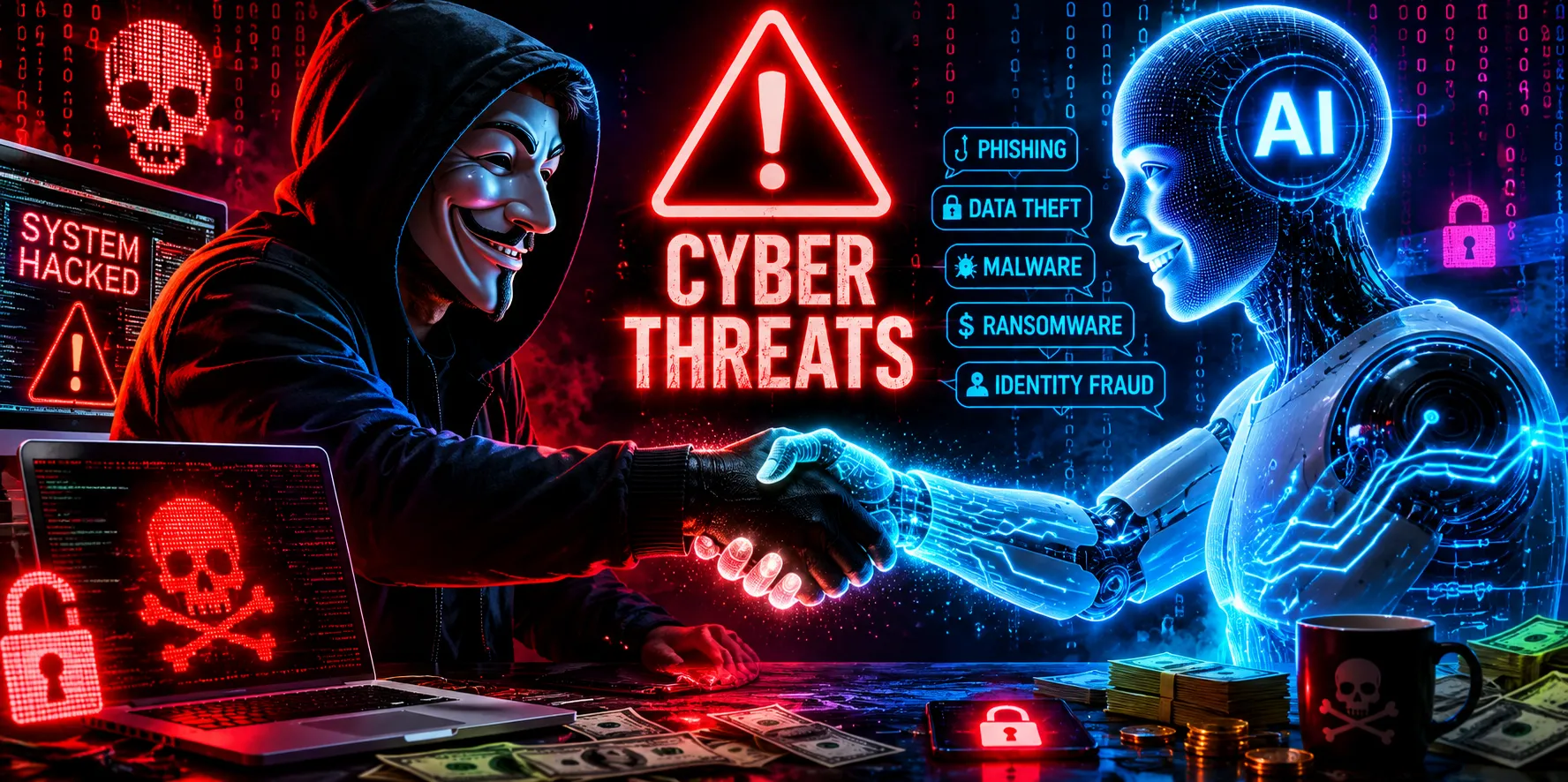
For years, artificial intelligence has been promoted as the technology that would make businesses smarter, faster, and more productive. Companies have embraced AI to automate customer support, analyze data, streamline workflows, and even strengthen their cybersecurity systems. But as organizations continue to invest in AI, security researchers say cybercriminals are moving just as quickly—using the same technology to launch a new generation of sophisticated online attacks.
Cybersecurity firms have reported a noticeable increase in AI-assisted scams over the past year, with businesses becoming one of the primary targets. Unlike traditional cyberattacks that often relied on obvious phishing emails or basic malware, today’s threats are more convincing, highly personalized, and increasingly difficult to identify before damage is done.
Experts say the growing accessibility of generative AI tools has lowered the barrier for cybercrime. Techniques that once required experienced hackers can now be carried out faster, with greater accuracy, and on a much larger scale. That shift is changing how businesses think about digital security.
Smarter Attacks Are Replacing Traditional Scams
For many years, phishing remained one of the most common ways attackers gained access to company systems. Employees became familiar with suspicious emails filled with spelling mistakes, awkward grammar, and poorly designed layouts. Spotting a scam wasn’t always easy, but there were usually enough warning signs.
That is no longer the case.
Modern AI tools are capable of producing polished emails that closely resemble legitimate business communication. They can imitate a company’s writing style, match professional formatting, and even personalize messages using publicly available information from company websites, LinkedIn profiles, or social media accounts.
Imagine an employee receiving what appears to be an urgent message from their finance director asking them to review an invoice before the end of the day. Everything—from the wording to the email signature—looks authentic. In many cases, the only clue that something is wrong is hidden behind a malicious link.
Security analysts say these realistic phishing campaigns are becoming far more successful because they exploit trust rather than technical weaknesses.
AI Is Helping Criminals Work Faster
One of the biggest advantages AI offers cybercriminals is speed.
Instead of manually researching individual targets, attackers can now automate much of the process. AI can scan company websites, identify key employees, collect publicly available information, and generate customized phishing messages within minutes.
Some security researchers have also observed AI being used to write malicious code, identify software vulnerabilities, and automate password attacks. While these tools don’t replace experienced hackers, they significantly reduce the time needed to prepare an attack.
For businesses, this means threats are evolving faster than many traditional security systems were designed to handle.
Deepfake Technology Adds Another Layer of Risk
Perhaps one of the most worrying developments is the rise of AI-generated voice and video impersonations.
Deepfake technology has improved dramatically over the last few years. Criminals can now create convincing audio recordings that imitate the voice of a company executive with surprising accuracy. In some reported cases around the world, employees have received phone calls that appeared to come from senior management requesting urgent financial transfers or confidential company information.
Video deepfakes are becoming increasingly realistic as well. Although they still require significant effort to produce, cybersecurity experts believe they could become a more common tool for financial fraud as AI technology continues to improve.
For companies that rely heavily on virtual meetings and remote work, this creates a new challenge. Verifying someone’s identity can no longer depend solely on hearing a familiar voice or seeing a familiar face on a screen.
Small Businesses Are Feeling the Pressure
Large corporations often make headlines after suffering cyberattacks, but experts warn that small and medium-sized businesses are equally at risk.
Many smaller organizations operate with limited IT budgets and fewer cybersecurity specialists. Criminals know this. Instead of targeting only major enterprises with extensive defenses, many attackers are turning their attention to businesses that may have weaker security practices.
A successful attack on a small company can still expose valuable customer information, disrupt operations, or serve as a gateway into larger supply chains connected to bigger organizations.
That’s why cybersecurity professionals say every business—regardless of size—should treat AI-powered threats as a growing concern rather than a distant possibility.
Why Human Error Still Matters
Despite the rapid advances in artificial intelligence, most successful cyberattacks still begin with a simple mistake.
Someone clicks on a convincing email. A weak password is reused across multiple accounts. An employee shares sensitive information without verifying the sender’s identity.
Artificial intelligence may have made scams more sophisticated, but people remain the primary target.
Security awareness training has become one of the most valuable investments companies can make. Employees who understand how modern phishing attacks work are far more likely to recognize suspicious behavior before it leads to a costly security breach.
Many organizations are now conducting simulated phishing exercises, encouraging staff to report suspicious emails instead of simply deleting them. These exercises help create a culture where cybersecurity becomes everyone’s responsibility—not just the IT department’s.