









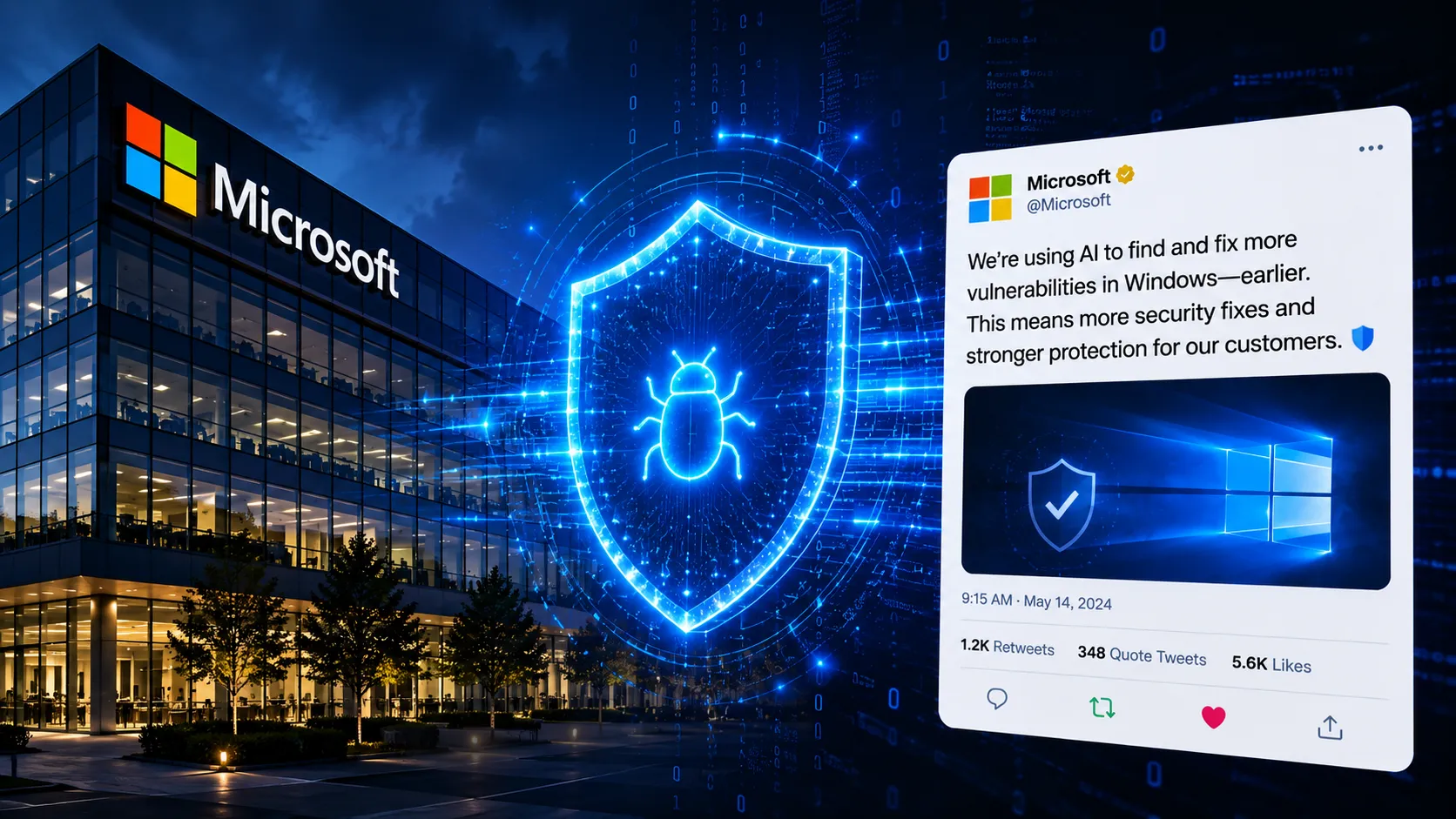
Microsoft is preparing for a future where artificial intelligence plays a much larger role in protecting Windows users. The company says its internal AI systems are now helping engineers discover software vulnerabilities earlier, a move that could lead to larger and more frequent security updates for Windows PCs.
The announcement comes at a time when cyber threats are becoming more sophisticated. Security researchers and even cybercriminals are increasingly using AI tools to find weaknesses in software faster than ever before. In response, Microsoft is embracing the same technology to strengthen its defenses.
According to the company, AI is now being integrated into various stages of its security process. The technology can scan critical parts of Windows, identify suspicious code patterns, and flag potential vulnerabilities before they become serious threats. Microsoft believes this approach will allow its teams to fix more issues and release a higher number of security patches in future updates.
For Windows users, that could mean Patch Tuesday—the company’s monthly security update cycle—may become significantly larger than it has been in previous years.
AI Is Changing the Cybersecurity Race
The cybersecurity landscape has shifted dramatically over the past year. Large language models and AI-powered tools can analyze millions of lines of code in a fraction of the time it would take human researchers.
That speed has created both opportunities and risks. While defenders can uncover weaknesses more efficiently, attackers can also use AI to identify and exploit vulnerabilities faster.
Microsoft acknowledged this growing challenge, saying that traditional security methods alone are no longer enough in an era of AI-driven threats. The company is now updating its Secure Development Lifecycle to specifically account for attacks that may be assisted or accelerated by artificial intelligence.
The move highlights a broader trend across the technology industry, where companies are increasingly treating AI as both a cybersecurity weapon and a potential threat.
Humans Still Make the Final Call
Despite its growing reliance on AI, Microsoft insists that humans will remain central to the security process.
The company says engineers will continue reviewing vulnerabilities discovered by AI systems and will make the final decisions on which issues need immediate fixes and how updates should be deployed.
This “human-in-the-loop” approach is designed to avoid mistakes that automated systems might make, including false positives or unnecessary patches.
Microsoft is also investing in new Windows-specific technologies and specialized AI systems capable of generating and validating potential fixes before they reach users. The goal is to speed up security responses without sacrificing software quality.
Bigger Updates Could Become the New Normal
The announcement may explain why Microsoft’s recent Patch Tuesday releases have become increasingly large. Some recent update cycles have included record numbers of security fixes, reflecting the growing volume of vulnerabilities being discovered.
Industry experts believe this trend is unlikely to slow down. As AI tools improve, researchers are expected to uncover software flaws at a much faster pace, leading technology companies to issue more patches and updates.
For businesses and individual users, this could mean paying closer attention to Windows updates and installing them more quickly than before.
A New Era for Windows Security
Microsoft’s decision to use AI as a vulnerability hunter marks another step in the company’s broader push to weave artificial intelligence into nearly every part of its software ecosystem.
The company is betting that the same technology reshaping productivity and search can also become one of its strongest defenses against cyberattacks.
If the strategy works, Windows users may see more security updates arriving on their PCs—but those extra patches could also mean their systems are becoming safer in a digital world where threats are evolving at machine speed.