









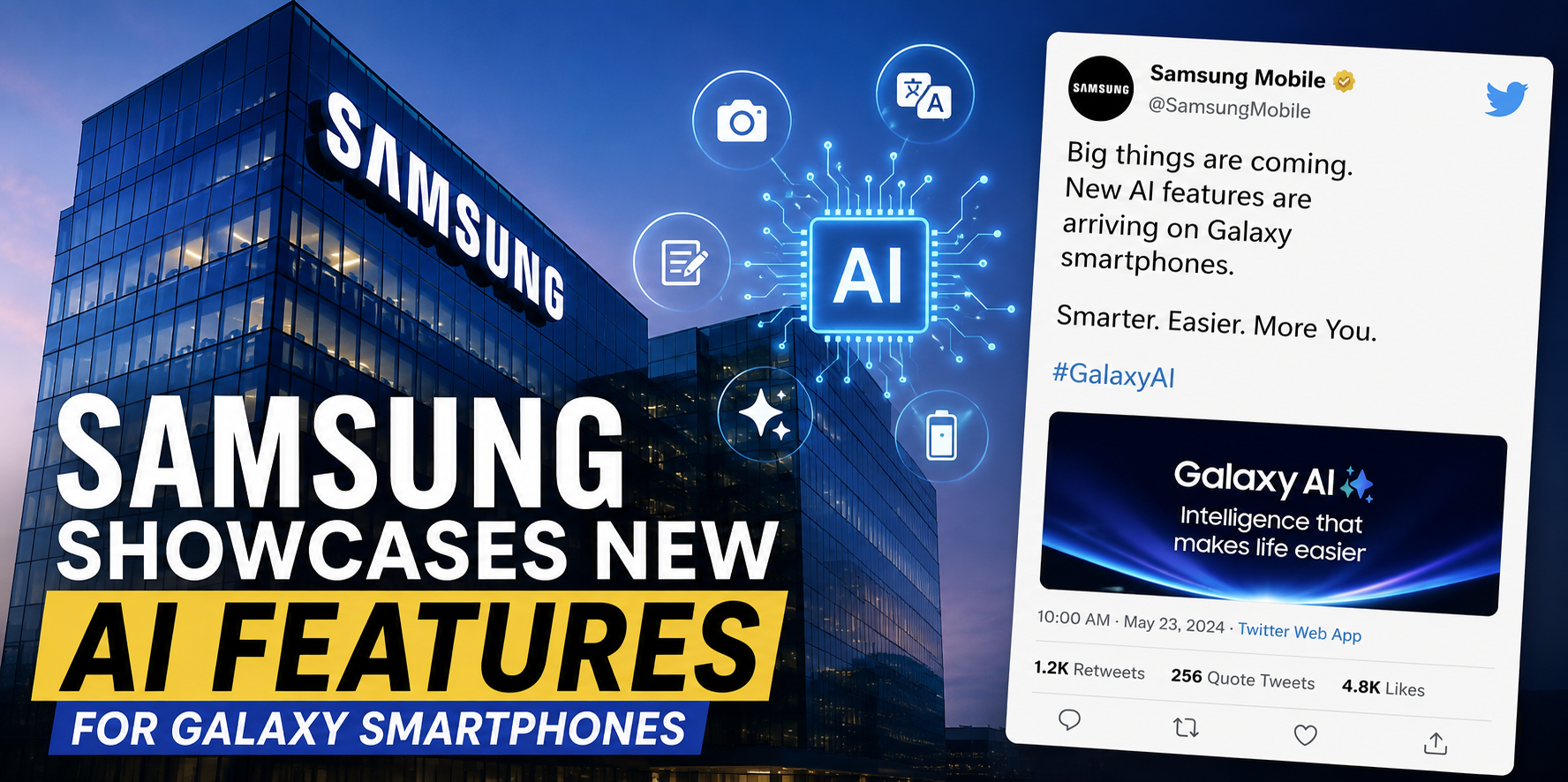
Samsung has spent the last few years turning artificial intelligence from a buzzword into a major selling point for its smartphones. Now, the company is continuing that strategy by introducing a fresh set of AI-powered features for its Galaxy devices, aiming to make everyday tasks easier, faster, and more personalized. Rather than focusing only on faster processors or improved camera hardware, Samsung is placing AI at the center of the smartphone experience.
As competition in the mobile industry intensifies, companies are looking for ways to stand out beyond traditional hardware upgrades. Samsung believes AI can be that difference. From smarter photo editing to real-time language translation and productivity tools, the latest Galaxy AI features are designed to help users accomplish more with fewer taps.
Samsung Pushes AI Beyond Basic Voice Commands
Not long ago, smartphone AI was mostly limited to voice assistants that could answer simple questions or set reminders. Today’s AI capabilities are much more advanced, and Samsung is taking advantage of that progress.
The newest Galaxy AI features go beyond voice control by understanding context, learning user habits, and assisting with everyday activities. Whether someone is drafting an email, organizing notes, translating a conversation, or editing vacation photos, AI now plays a much bigger role behind the scenes.
Samsung says its goal is not to replace the user but to remove repetitive tasks that consume time. Instead of navigating through multiple apps or manually adjusting settings, users can rely on AI to complete those actions automatically.
Smarter Photo Editing Without Professional Skills
Photography continues to be one of the biggest reasons consumers upgrade their smartphones, and Samsung is enhancing that experience with AI-powered editing tools.
The latest software allows users to remove unwanted objects from photos, improve image clarity, adjust lighting, reduce background distractions, and even reposition certain elements within a picture. These changes can often be completed with just a few taps instead of using complicated editing software.
AI also analyzes scenes before a photo is taken. It can recognize landscapes, pets, food, people, or nighttime environments and automatically optimize camera settings for better results.
For everyday users, this means capturing social media-ready photos without needing professional editing experience.
Real-Time Translation Becomes More Natural
Language barriers remain a challenge for travelers and international professionals, but Samsung is expanding its AI-powered translation capabilities.
The updated translation tools can convert spoken conversations in real time, helping two people communicate even if they speak different languages. Live translation also works during phone calls in supported regions, reducing the need for third-party translation apps.
Samsung has also improved text translation inside messages, emails, and web pages, allowing users to understand foreign-language content more naturally.
While machine translation is not always perfect, improvements in AI have made conversations smoother and significantly more accurate than previous generations.
Writing Assistance for Everyday Productivity
Many smartphone users spend hours each day replying to emails, chatting with colleagues, or posting on social media. Samsung’s latest AI writing tools are designed to simplify those daily tasks.
Users can ask AI to rewrite text in a more professional tone, shorten lengthy paragraphs, correct grammar, summarize long messages, or adjust writing styles depending on the audience.
Instead of copying text into separate AI applications, many of these features work directly within supported Galaxy apps, creating a smoother workflow.
For students, professionals, and business owners, this could save valuable time while improving communication quality.
AI Makes Searching Easier
Finding information on a smartphone often requires switching between multiple apps. Samsung’s AI-powered search features aim to reduce that friction.
Visual search tools let users identify objects, landmarks, products, or text simply by selecting them on the screen. Rather than typing long search queries, users can interact directly with images or content already displayed.
This approach reflects a broader shift toward more natural ways of interacting with technology, where AI understands what users are looking at instead of relying entirely on typed commands.
Better Battery and Performance Management
AI is also working behind the scenes to improve device performance.
Samsung says the software learns how individuals use their phones throughout the day and adjusts background processes accordingly. Frequently used apps can launch faster, while unnecessary background activities are reduced to conserve battery life.
Charging behavior can also become smarter over time. AI analyzes charging habits and helps optimize battery health by reducing long-term wear, an increasingly important feature as consumers keep smartphones for longer periods.
Although these improvements may not always be visible, they can contribute to a smoother overall experience.
Privacy Remains a Key Focus
As AI becomes more powerful, privacy concerns naturally grow. Samsung says protecting user information remains a priority.
Many AI features are designed to process information directly on the device whenever possible, reducing the amount of personal data that needs to be sent to cloud servers. This on-device processing can also improve response times while offering an additional layer of privacy.
For more advanced AI tasks requiring cloud computing, Samsung says users maintain control over available privacy settings and permissions.
Building trust will remain essential as smartphone manufacturers continue expanding AI capabilities.
Competition in the AI Smartphone Market
Samsung is not alone in the race to bring advanced AI features to mobile devices. Other major technology companies are investing heavily in artificial intelligence as smartphones evolve into more intelligent personal assistants.
Manufacturers are increasingly competing on software experiences rather than hardware specifications alone. While processors, displays, and cameras remain important, AI is quickly becoming one of the biggest factors influencing purchasing decisions.
Industry analysts believe future smartphone competition will depend largely on how useful AI becomes in everyday life rather than how many features companies can advertise.
What It Means for Galaxy Users
For existing Galaxy owners, these AI improvements represent more than flashy demonstrations. They aim to simplify routine tasks that millions of people perform every day.
Instead of spending extra time editing photos, translating conversations, searching for information, or organizing notes, users can allow AI to handle much of the work automatically.
The real value will ultimately depend on how consistently these tools perform in real-world situations. If they deliver reliable results without becoming intrusive, they could change how people interact with their smartphones on a daily basis.
Looking Ahead
Samsung’s latest AI announcements reinforce a broader industry trend: smartphones are becoming increasingly intelligent companions rather than simple communication devices. Artificial intelligence is steadily moving into nearly every part of the mobile experience, from photography and productivity to security and personalization.
As AI technology continues to mature, Galaxy users can expect even deeper integration in future software updates and devices. Features that once felt experimental are rapidly becoming everyday tools, helping users save time and accomplish more with less effort.
For Samsung, the strategy is clear. The company wants Galaxy smartphones to be recognized not only for premium hardware but also for practical AI experiences that genuinely improve daily life. If these innovations continue to evolve as promised, AI could become one of the strongest reasons consumers choose a Galaxy device in the years ahead.